
Agriculture Accounting Built Around the Season, Not the Month
RAHA Financials provides agriculture accounting support for farms, agricultural businesses and growing agribusinesses that need clearer bookkeeping, reporting, payroll, budgeting, tax-ready records and financial visibility across the operation.
The aim is simple: organise the financial side of the business around how agriculture actually operates, so management can see what has happened, what the next season may require and where cash or margin is being put under pressure.
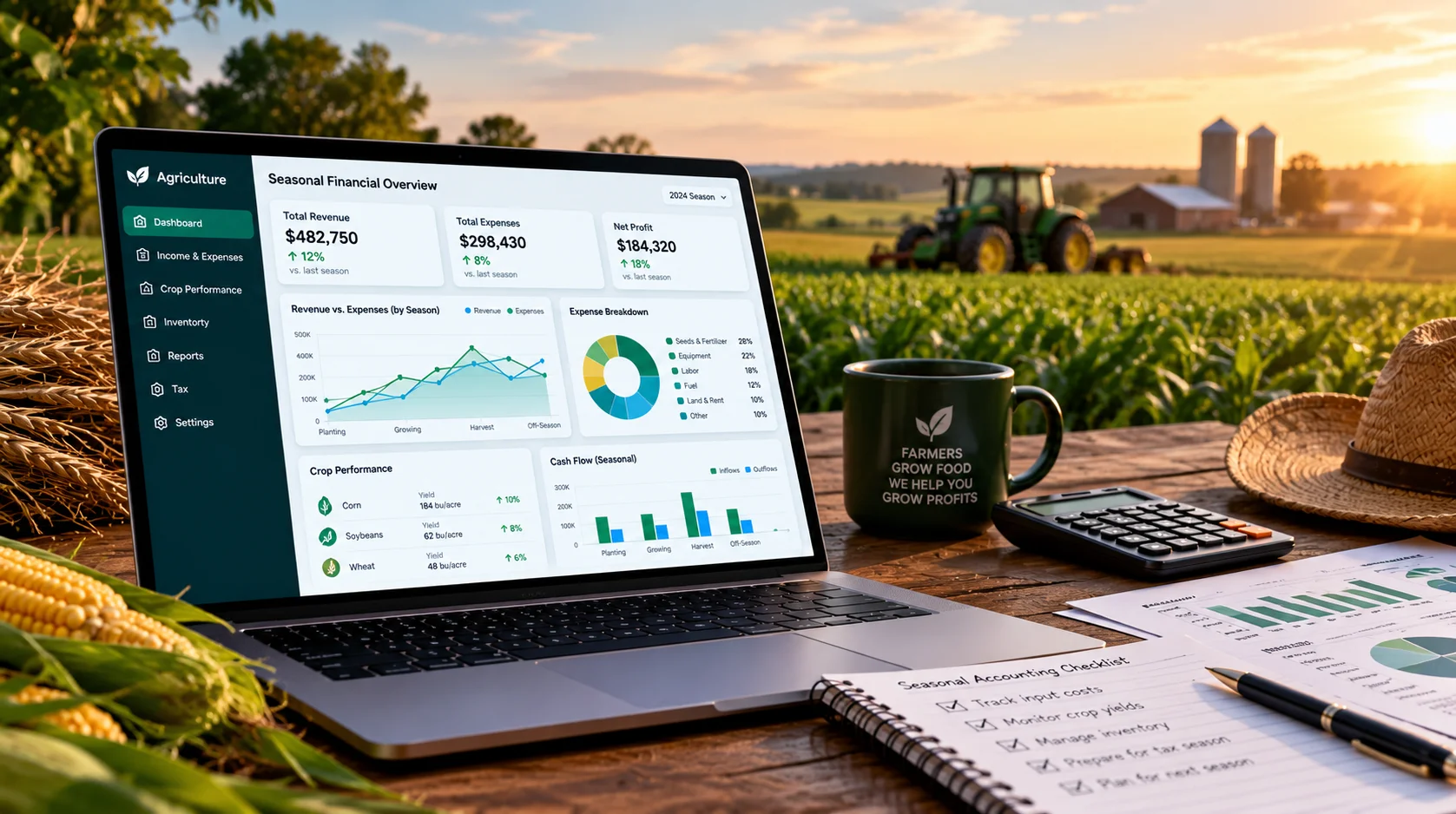
The Farm Year Has More Than One Financial Calendar
A calendar month matters for accounting. A production season matters for management. Agriculture accounting becomes more useful when those two views can work together.
That means financial records should help management separate routine bookkeeping from the wider questions that drive the operation:
- What did we spend before revenue arrived?
- Which crop, herd, product line or business activity is carrying the strongest margin?
- How much cash is committed to payroll, suppliers, equipment and other operating needs?
- Are we carrying receivables or payables that require attention?
- What will the next operating cycle require before it starts generating cash?
- Can we produce clear financial information without rebuilding it from spreadsheets at year-end?
A Season-to-Season Finance Model for Agriculture
For this industry, we structure the finance conversation around the operating cycle rather than around a generic list of accounting services.
Before the Season
During the Season
At Harvest, Sale or Production Completion
Between Seasons
Before the Season: Know What the Operation Is Committing To
Many agricultural costs arrive before the related revenue. Seed, feed, fertiliser, fuel, labour, supplier commitments, repairs, equipment and other inputs can create significant cash requirements before income catches up.
Our budgeting and forecasting services can help management turn expected revenue, operating costs, payroll and other assumptions into a more structured financial plan.
The purpose is not to predict every market or weather outcome. It is to understand the cash consequences of the assumptions the business is already making.
During the Season: Keep the Books Close Enough to the Operation
When financial records fall several months behind, it becomes harder to tell whether a cash problem is temporary, seasonal or part of a wider performance issue.
Farm bookkeeping and agricultural bookkeeping can support:
- income and expense recording
- bank and credit-card reconciliation
- supplier and customer transaction organisation
- payables and receivables support where relevant
- payroll-related financial records
- consistent monthly close routines
- clean underlying information for reporting and tax preparation
For operations that need recurring support, our small business bookkeeping services provide the accounting foundation that broader farm and agribusiness reporting depends on.
At Harvest, Sale or Completion: Separate Revenue From Profit
A strong sales period does not automatically mean the operation produced a strong financial result.
Management also needs visibility over the costs required to generate that revenue and the cash still tied up elsewhere in the business.
Depending on the operation and the systems in place, useful management reporting may help compare:
- revenue by enterprise, activity or operating unit
- direct and recurring operating costs
- labour and payroll costs
- equipment and repair expenditure
- outstanding receivables and supplier obligations
- cash movement and working-capital pressure
- actual results against budgets or forecasts
Our financial reporting services can help turn accounting records into information that is easier to review across the wider operation.
Between Seasons: Use the Numbers Before the Next Commitments Are Made
The value of agriculture accounting is highest when the previous period informs the next one.
A period review should help management ask what changed, what worked, what absorbed more cash than expected and which assumptions need to be revised before the next operating cycle.
That may lead to a new budget, a different purchasing plan, revised staffing, closer receivables follow-up or changes to the accounting workflow itself.
Agriculture Accounting Should Show More Than One Bottom Line
A farm or agribusiness can be profitable overall while one enterprise, location or operating activity performs very differently from another.
The accounting structure should therefore be useful at more than one level.
| Financial View | What Management May Need to See | Why It Matters |
|---|---|---|
| Enterprise / Activity | Income, direct costs, labour and other financial activity linked to a crop, livestock activity, service line or business unit where the accounting system supports it. | Helps management identify which parts of the operation are driving or weakening financial performance. |
| Whole Business | Company-wide income, expenses, balance-sheet position and cash flow. | Shows whether the operation as a whole is financially sustainable. |
| Forward View | Expected cash inflows, payroll, supplier commitments, equipment spending and other assumptions. | Makes seasonal working-capital pressure more visible before it arrives. |
| Exception View | Overdue receivables, unusual expenses, unresolved reconciliations and reporting gaps. | Directs management attention towards issues that require action rather than more reporting. |
Cash Flow Can Look Weak Before the Operation Is Weak
Agricultural businesses often experience uneven cash timing. Operating costs may be concentrated earlier in the cycle while income arrives later, and major equipment or repair decisions can create additional pressure. That makes cash flow different from profitability.
A business can have productive assets and expected revenue while still needing clearer visibility over when cash enters and leaves the operation.
Our budgeting and forecasting services can help model expected cash movement and different operating scenarios using the financial information already available to management.
When Receivables Become Part of the Agricultural Working-Capital Problem
Some farming and agribusiness models sell through counterparties, commercial customers, processors, distributors or other channels where payment is not immediate.
If outstanding balances are not visible and followed up consistently, working capital can remain tied up long after the underlying product or service has been delivered.
Where appropriate to the operating model, our accounts receivable management services can support ageing, agreed customer follow-up, cash application and receivables reporting.
Commercial terms, credit decisions, settlements and legal escalation remain client-owned unless separately agreed and appropriately supported.
Payroll Has to Follow the Pace of the Operation
Agricultural payroll can change with staffing levels, seasonality and the structure of the business. Whatever the workforce model, employee information needs to reach payroll accurately and on time.
Our payroll processing services help businesses manage recurring pay-cycle administration, wages, deductions and payroll information through a more consistent process.
Where specialist agricultural labour, visa, wage, union or other employment rules apply, those requirements should be scoped separately rather than assumed to be included in standard payroll processing.
Agriculture Accounting Software Should Fit the Operation, Not Fight It
Agricultural businesses often reach a point where spreadsheets or a generic accounting setup no longer provide the detail management needs. Software choice can be part of the solution, but technology alone does not create reliable financial information.
An accounting platform still needs the right chart of accounts, consistent workflows, reliable inputs and a reporting structure management can use. Our accounting software implementation services can help businesses review software requirements, configure accounting systems, migrate relevant data and improve the workflows surrounding the accounting platform.
Where specialist farm-management or production software is required, the accounting platform should be assessed alongside those operational systems so financial workflows remain clear and consistent.
Tax Preparation Is Easier When the Farm Records Are Already Organised
Agricultural businesses can generate a large volume of financial records across operating expenses, payroll, equipment, business income and other transactions. Tax season should not be the first time those records are brought together.
Our business tax preparation services can work from records maintained throughout the year, reducing the amount of bookkeeping clean-up needed before filing.
Specialist agricultural tax elections, programmes, credits, depreciation decisions and entity-specific tax treatment should be confirmed for the individual client rather than assumed to apply to every agricultural business.
Agribusiness Accounting Changes as the Organisation Gets Larger
Agribusiness accounting may involve more than the finances of a single farming operation. Food processors, agricultural suppliers, service companies and agricultural technology businesses can develop multi-location, multi-entity and higher-volume finance requirements.
As that complexity increases, finance may need stronger reporting, clearer approvals, more reliable systems and a more formal close process. Our risk advisory services can help larger organisations assess finance-process risks, control gaps and responsibilities as operations expand.
For organisations looking across accounting, payroll, reporting, controls and advisory requirements together, our enterprise financial solutions provide a broader framework for financial support.
Different Agricultural Operations Need Different Financial Views
Crop and Row-Crop Operations
Crop businesses may need to understand input costs, labour, equipment spending, cash requirements and financial performance across different crops, seasons or operating units. The accounting structure should make those differences easier to see where the available systems and records support them.
Livestock Operations
Livestock businesses can have recurring feed, labour, veterinary, equipment and facility costs alongside uneven sale timing. Good accounting should help management separate day-to-day operating activity from the wider cash and financial position of the business.
Mixed Farms and Multi-Enterprise Operations
When several activities sit inside one operation, company-wide totals can hide important differences. A mixed operation benefits from financial records that can distinguish the main enterprises without creating an accounting structure so complicated that nobody maintains it properly.
Agricultural Suppliers and Service Businesses
Agricultural supply companies, contractors and service businesses may have more conventional sales cycles but still operate around seasonality, customer concentration and agriculture-specific demand patterns. Their finance process may need stronger receivables, payroll, inventory-related visibility and cash forecasting.
Agritech and Growing Agribusinesses
Agricultural technology and larger agribusinesses may require more formal finance processes as headcount, investors, entities, systems or geographic reach increase. At that stage, accounting needs to connect with broader reporting, controls, payroll and planning rather than remaining a standalone bookkeeping function.
Eight Signs the Finance Process Has Fallen Behind the Operation
- Bookkeeping is regularly several months behind.
- Management cannot explain which part of the operation generated or consumed the most cash.
- Personal, farm and related-business transactions require repeated clean-up.
- Payroll data does not flow cleanly into the accounting records.
- Tax preparation starts with reconstructing the books.
- Budgets are created but not compared with actual results.
- Financial reporting depends on one spreadsheet or one employee's knowledge.
- The business has grown into multiple activities, entities or locations without upgrading the finance process.
These do not automatically mean the business needs a large internal finance department. They do indicate that the accounting model may need to catch up with the operation.
What Should Stay With Management?

Agriculture and Farm Accounting Across the United States
RAHA Financials can support farms and agricultural businesses across the United States through cloud-based accounting, payroll and financial systems.
The service can be structured around the existing accounting environment, transaction volume, operating model and responsibilities retained by the internal team.
Frequently Asked Questions About Agriculture Accounting
Agricultural accounting is the process of recording, organising and reporting the financial activity of farms and agricultural businesses.
It uses the same core accounting principles as other businesses but needs to reflect the way agricultural operations earn, spend and hold cash across seasons, enterprises and operating activities. The appropriate level of detail depends on the farm or agribusiness, its systems and the decisions management needs to make.
Farm accounting often needs to reflect stronger seasonality, uneven cash timing and financial activity across different agricultural enterprises.
Bookkeeping still provides the underlying transaction records, but management may also need visibility over crop or livestock activities, seasonal cash requirements, equipment spending and operating performance across different parts of the farm.
Farm accounting services can help keep financial records current and make income, costs, cash flow and operating performance easier to understand.
The practical benefit is better financial visibility throughout the year. Management can review current records, compare actual results with expectations and enter tax preparation or planning discussions with more organised information.
Accounting provides the historical financial information needed to build more useful cash-flow forecasts around seasonal inflows and outflows.
Forecasts can bring together expected sales, payroll, supplier payments, operating costs and planned purchases so management can identify periods of higher cash demand before they arrive.
It can when the accounting structure and source data are detailed enough to separate the relevant income and costs.
The exact design depends on the systems used and how reliably transactions can be allocated. The goal should be useful management information without creating an accounting process that is too complicated to maintain consistently.
Farm bookkeeping maintains the underlying financial records, while farm accounting uses those records for reporting, analysis, planning and wider financial decisions.
Bookkeeping typically includes transaction recording and reconciliation. Accounting builds on that information through financial statements, performance review, budgeting, cash-flow planning and tax-ready financial records.
Look for accounting software that fits the complexity of the operation, supports reliable transaction capture and produces the financial information management actually needs.
The best system is not necessarily the one with the longest feature list. It should work with the bookkeeping process, allow appropriate categorisation or enterprise tracking where needed, support reconciliations and make reporting easier rather than creating additional spreadsheet work.
Yes, RAHA can help review, configure and implement accounting software for agricultural businesses where the platform fits the required accounting workflow.
That can include software selection, chart-of-accounts configuration, data migration and process setup. Specialist farm-management or production software requirements should be assessed separately from the accounting platform itself.
Yes, organised accounting records can make business tax preparation more efficient because income, expenses and balance-sheet information have already been maintained throughout the year.
The tax treatment of agricultural transactions can vary significantly by business and circumstance, so specialist tax questions should be addressed within the relevant tax engagement rather than assumed from bookkeeping records alone.
Outsourcing may make sense when financial administration takes too much management time or the existing process is no longer keeping pace with the operation.
Common signs include late bookkeeping, unreconciled accounts, year-end clean-up, spreadsheet dependence and difficulty explaining cash flow or financial performance across the operation.
Yes, RAHA can support recurring payroll processing where the engagement fits the business's workforce and payroll requirements.
Where specialised agricultural employment, seasonal-worker or other sector-specific rules apply, those compliance requirements should be identified and scoped separately.
Yes, RAHA Financials can provide accounting and financial support to agricultural businesses across the United States.
Cloud-based accounting and payroll systems allow much of the work to be delivered remotely, with the engagement tailored to the farm or agribusiness, its existing systems and internal responsibilities.
Make the Numbers Useful Before the Next Season Begins
Agriculture already asks management to make decisions with uncertainty around timing, costs, demand and operating conditions. The finance process should reduce uncertainty where it can. RAHA Financials helps farms and agribusinesses keep the underlying records organised, understand cash and financial performance more clearly, and connect bookkeeping with reporting, payroll, forecasting, tax preparation and broader financial support.